Featured Article
Post-inflammatory hyperpigmentation (PIH) is a reactive process resulting from increased melanin or abnormal distribution of melanin secondary to inflammatory skin conditions, dermatologic therapies, and external stimuli. Because PIH is a common condition that has a substantial effect on the quality of life, an understanding of its treatment modalities is essential. Though there are many therapeutic strategies for hyperpigmentary conditions such as melasma that are described in the literature, fewer studies focus on PIH. This article aims to provide a comprehensive literature review of therapies specifically used to treat PIH, such as topical combinations, chemical peels, and lasers.
This article aims to provide a comprehensive literature review of therapies specifically used to treat PIH, such as topical combinations, chemical peels, and lasers.
Post-inflammatory hyperpigmentation (PIH) is a reactive process resulting from increased melanin or abnormal distribution of melanin, secondary to inflammatory skin conditions such as acne, atopic dermatitis, contact dermatitis, and psoriasis, as well as external factors such as burns and radiation therapy. An understanding of treatment strategies for PIH is essential, as it has a large impact on the quality of life.
Though there are many therapeutic strategies for hyperpigmentary conditions such as melasma that are described in the literature, fewer studies specifically address PIH. Thus, we conducted a literature review on PubMed using key words “post-inflammatory hyperpigmentation” OR “postinflammatory hyperpigmentation.”
Studies that did not specifically address PIH and articles that were not published in English were excluded. Additional studies were obtained by scanning references. This review adds to the current literature by discussing the evidence for topical therapies, chemical peels, and laser therapy used specifically for hyperpigmentation from PIH.
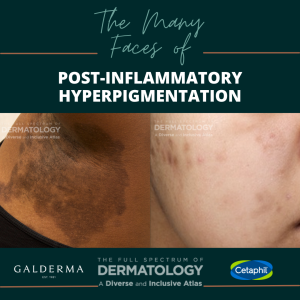
Inclusive Derm Atlas PIH Images
You May Also Like